Why personal branding matters on LinkedIn
Jobs change, companies change, whole industries change. A reputation you have built in public goes with you.
- People find you. Recruiters, clients and collaborators search LinkedIn and read profiles. A clear brand tells them in seconds what you do.
- Your network grows with the right people. Posts on your topics bring in people who care about them. That is worth more than a long list of connections.
- You become the person to ask. Useful posts, week after week, are how people learn that you know your subject.
- The feed works with you. LinkedIn says its feed is about being “relevant to your interests, not a popularity contest”. Hootsuite counts the poster’s expertise in a topic among the things it weighs. A clear focus helps the feed show your posts to the people who want them.
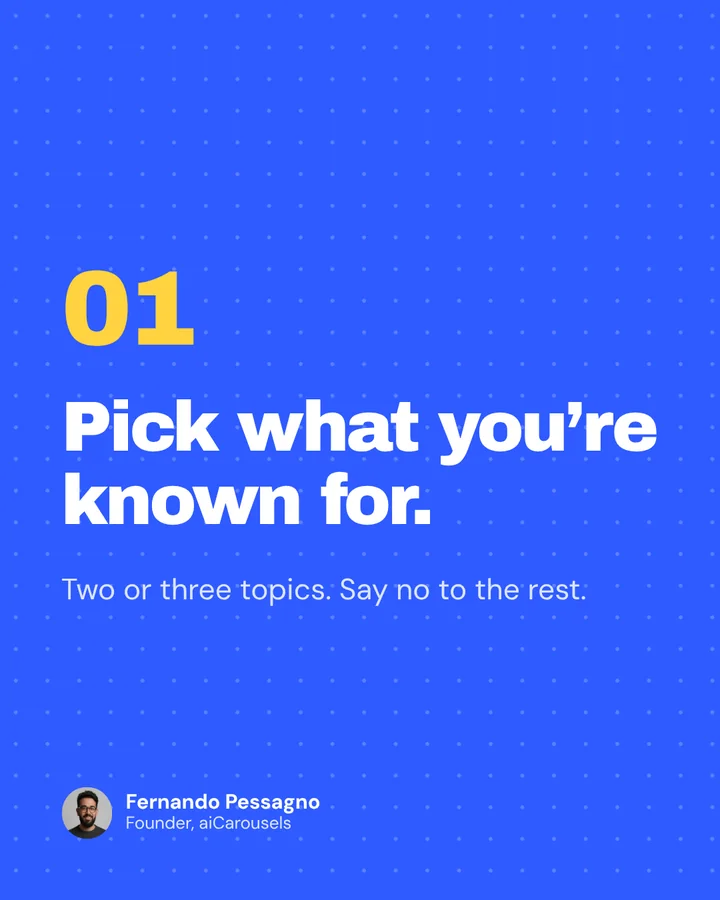
Step 1: Decide what you want to be known for
Pick two or three topics where your work gives you something to say. Hootsuite’s advice is the same: stick to a few core topics so people, and the feed, know what to expect from you.
Try writing one sentence: I help [who] with [what], because I have [done what]. If you can’t finish it, narrow the topic. If ten people in your field could write the same sentence, add what is yours: your sector, your method, your story.
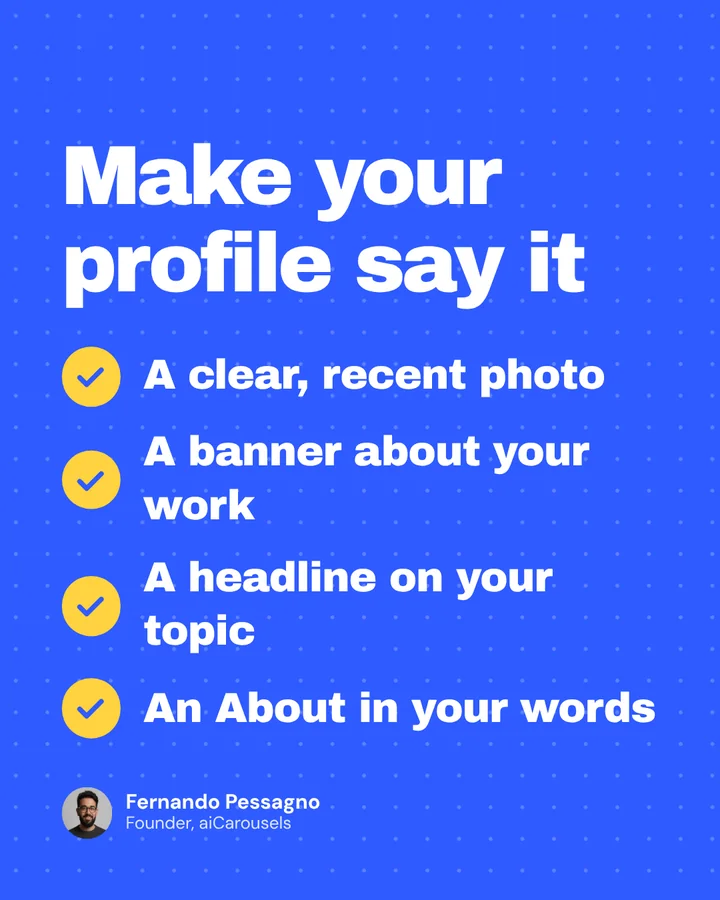
Step 2: Make your LinkedIn profile say it
A good post sends people to your profile. Make sure it tells the same story.
- Profile photo. A clear, recent headshot with your face easy to see. No selfies at arm’s length, no holiday photos. See LinkedIn profile picture best practices and how to take a LinkedIn headshot. The free profile picture tester shows it in LinkedIn’s circle, in light and dark mode.
- Banner. The wide image behind your photo is free space to say what you do. The free LinkedIn banner maker makes one at the right size.
- Headline. Not just your job title: who you help and how, with the most important words first. Try the free LinkedIn headline generator.
- About. Your story in your own words, not your CV again. Say what you do, for whom, and what to do next. The free LinkedIn summary generator gives you a first draft.
- Featured. Pin your best posts and links near the top, so visitors see your best work first. See how to add a Featured section.
Then look at the whole thing as a visitor would, on a computer and a phone, with the free LinkedIn profile preview.
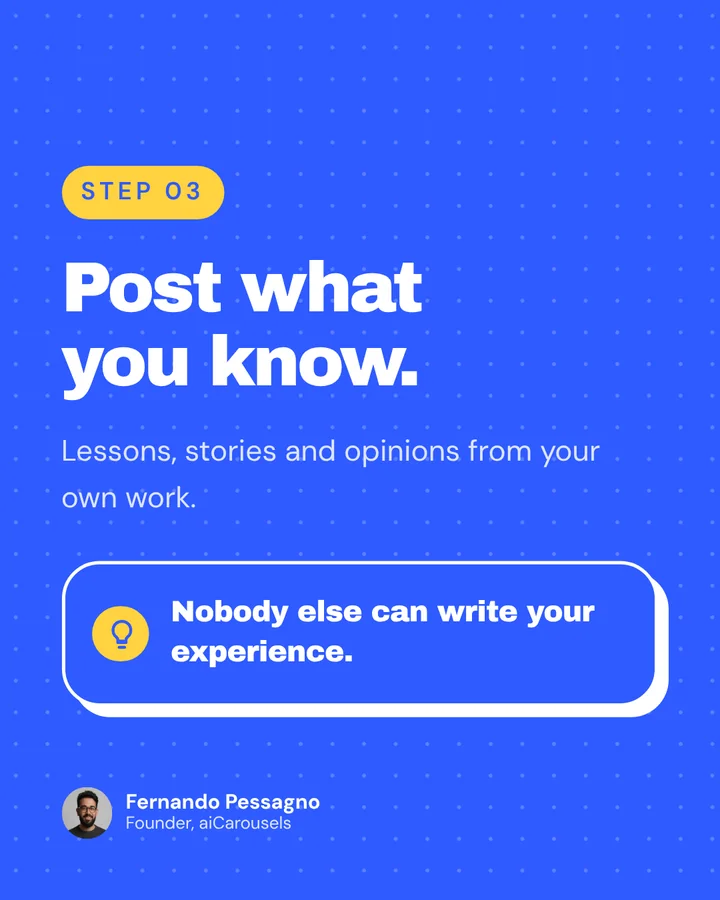
Step 3: Post what you know
Share what only you can: lessons from your work, stories with a point, opinions you can back up, advice someone can use today. Skip the corporate speak. People respond to a person.
- Carousels for anything with steps, a list or a story: a case study, a how-to, a framework. Each slide carries one idea. If you coach, the frameworks you use with clients make good carousels. See how to post a carousel on LinkedIn.
- Quote cards for one line worth remembering, from your post or someone you learnt from. The free quote card generator makes them.
- Text posts for one clear thought. The first line does the work: see LinkedIn post hooks.
- Photos for behind the scenes: your desk, your team, the event. See how to post multiple photos.
That is how the writers in aiCarousels work. Each has its own voice, and none of them invents numbers, results, quotes or stories you didn’t give them. Mia (Natural), Leo (Founder) and Ava (Teacher) suit LinkedIn well; all 19 come with Pro.
We put our prices up 40% in March. I was sure we’d lose half our customers; we lost two, and one of them came back in June.
- 01
Set up your brand kit once
On the Brand kits page, choose a Person kit: it leads with your photo and name. Pick your look, answer Who writes for this kit?, add your signature and a few Facts the AI can use: what you do, who it’s for, results you’re proud of.
- 02
Turn what you know into a carousel
In aiCarousels, type the idea, keep LinkedIn at 4:5 and press Generate. The carousel starts from your kit: your look, your writer’s voice, your name and photo on the slides.
- 03
Post it to your profile
Click Post to LinkedIn, set the Document title and click Post now. It goes to your personal profile, with nothing to download or upload.
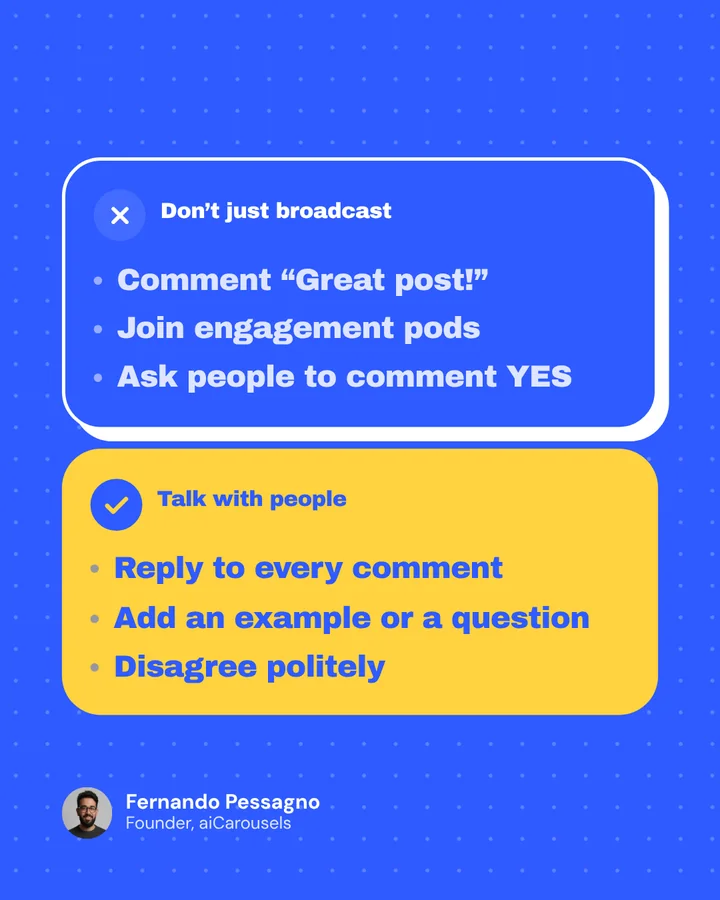
Step 4: Talk, don’t just broadcast
A personal brand is also how you show up in other people’s posts.
- Reply to the comments you get. A thoughtful answer often teaches more than the post.
- Comment on posts in your field. Add something: an example, a question, a polite disagreement. “Great post!” adds nothing.
- Ask questions you want answered. Not “comment YES if you agree”: LinkedIn said in March 2026 it is cutting that kind of bait.
- Skip engagement pods. LinkedIn is working to make them ineffective, along with tools that fake comments.
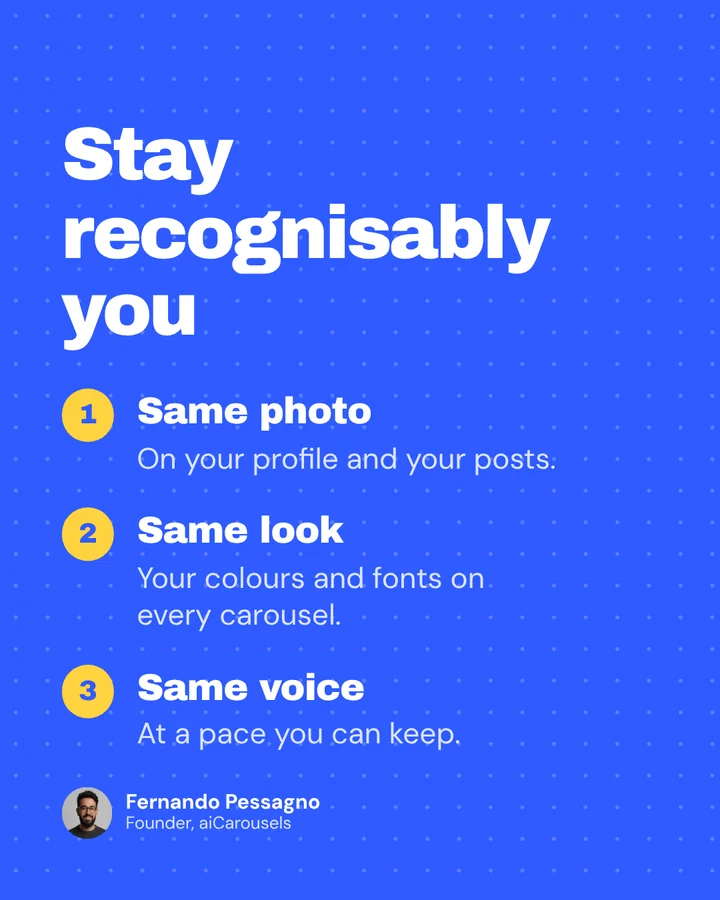
Step 5: Look and sound the same every time
Recognition comes from repetition. The same photo on your profile and your posts, the same colours and fonts on your carousels, the same voice in your captions. Someone scrolling should know it’s you before they read your name.
Consistency is about quality, not volume. Posting too often can wear out your network. Pick a pace you can keep with posts you’re proud of, and keep it.
In aiCarousels, your brand kit keeps the look, the writer and the signature the same on every new carousel. Give it a theme in your own colours and fonts, and a writer with a voice of its own keeps the tone steady from post to post.
Step 6: Check what works, then do more of it
Every few weeks, look at your posts in LinkedIn’s analytics. Which topics got comments from the people you want to reach? Which formats got saved or shared? Who started following you? Do more of what works for your readers, and drop what doesn’t. For timing, see the best time to post on LinkedIn; for how the feed decides, see how the LinkedIn algorithm works. The rest is in our full set of LinkedIn guides.
LinkedIn personal branding mistakes to avoid
- Trying to cover everything. Five topics make you forgettable. Two or three make you the person for them.
- A profile that says something else. If your posts are about leadership and your headline is only a job title, visitors leave confused.
- Sounding like a brochure. Corporate speak and borrowed buzzwords hide the person people came for.
- Chasing reach with bait. Pods and “comment YES” posts are exactly what LinkedIn is cutting.
- Posting for the sake of it. One useful post beats three you don’t care about.
- Giving up too soon. A reputation builds over months, not weeks.


